KWIET NOISE // Issue 01Page 01
KWIET NOISE
1
THE OMNIBUS ISSUE
Issue 01 · printed loud, read quiet
Track A English · Track B symbol · evidence underneath
KWIET NOISE · Issue 0101
The Omnibus Issue · 16 printed pages · Printed loud, read quiet
THE OMNIBUS ISSUE
Issue 01 · printed loud, read quiet
Track A English · Track B symbol · evidence underneath
Plate
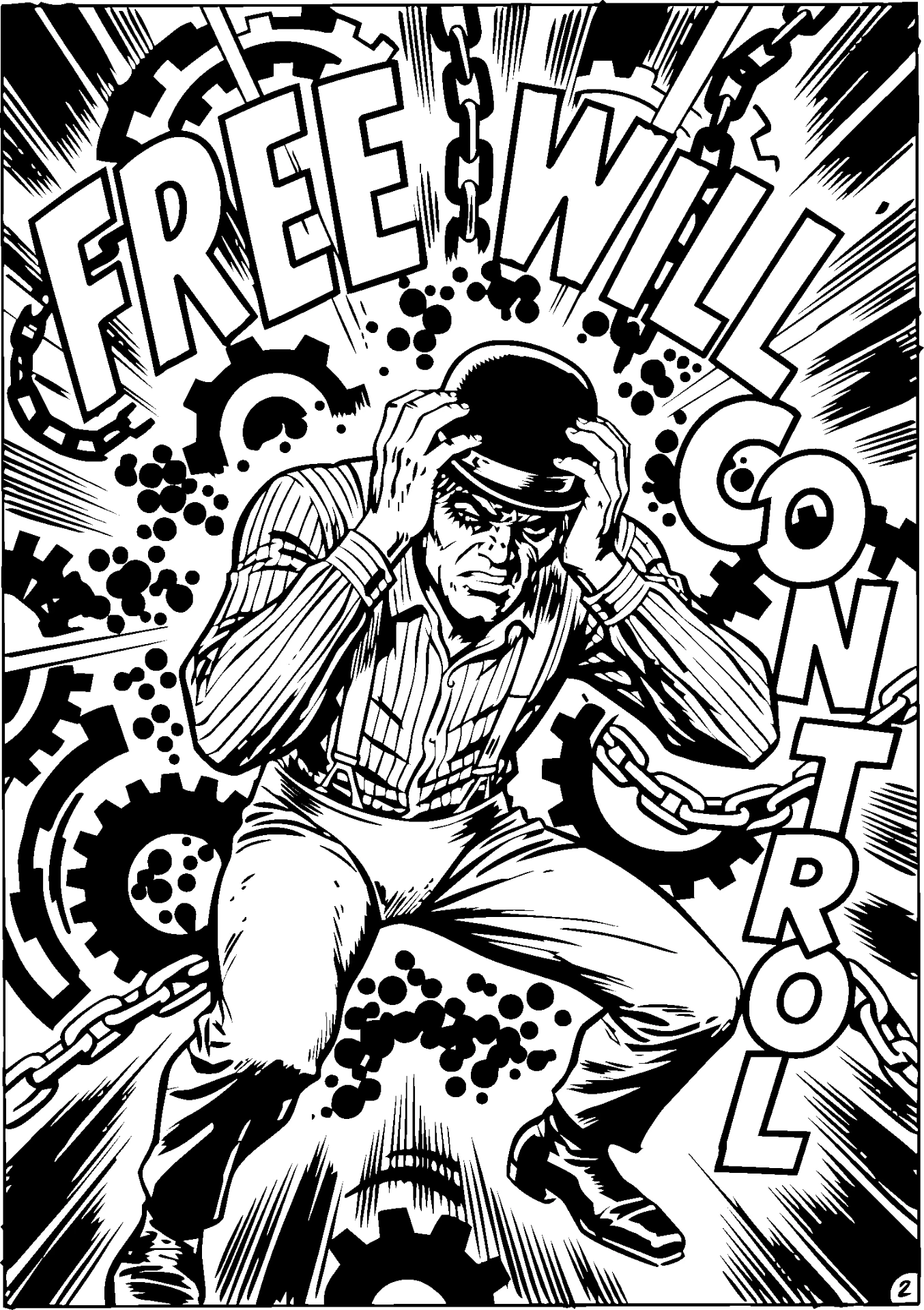
A working man holds his own head on while the gears keep turning behind him.
Essay
The gears are not a metaphor for the factory. They are a diagram of the day: alarm, fare, shift, screen, feed, sleep.
Set direct from the typewriter
Track A — English
Every system that wants you compliant starts by making its own operation invisible. The timetable, the till, the till receipt, the algorithm that decides what you hear next: none of them announce themselves as instruments. They simply arrange the hours until arrangement feels like weather.
The plate opposite refuses that. It draws the mechanism at full size, chains included, so the argument can be had in daylight. You cannot negotiate with a machine you have agreed not to see.
What the drawing does
It puts the gears in the same frame as the man. No background, no excuse, no comfortable distance. The lettering does the shouting so the figure does not have to.
Track A — English
Control is cheapest when it is installed rather than enforced. The habit of anticipating what will be allowed does more work than any supervisor. That is the hand on the hat: holding the head down before anyone asks.
Kwiet Noise is a method for noticing the installation. Print it flat, label the tracks, put the evidence underneath, and let the reader check the working. Free will is not a feeling. It is an audit.
Track B — Symbol
Gear, chain, ruled order, refusal. Read left to right; the last mark is the only one you supply yourself.
Method
Before the edit was free, every decision cost something. That cost is what made the records sound like they were made by people who had decided.
Track A English · Track B symbol
Track A — English
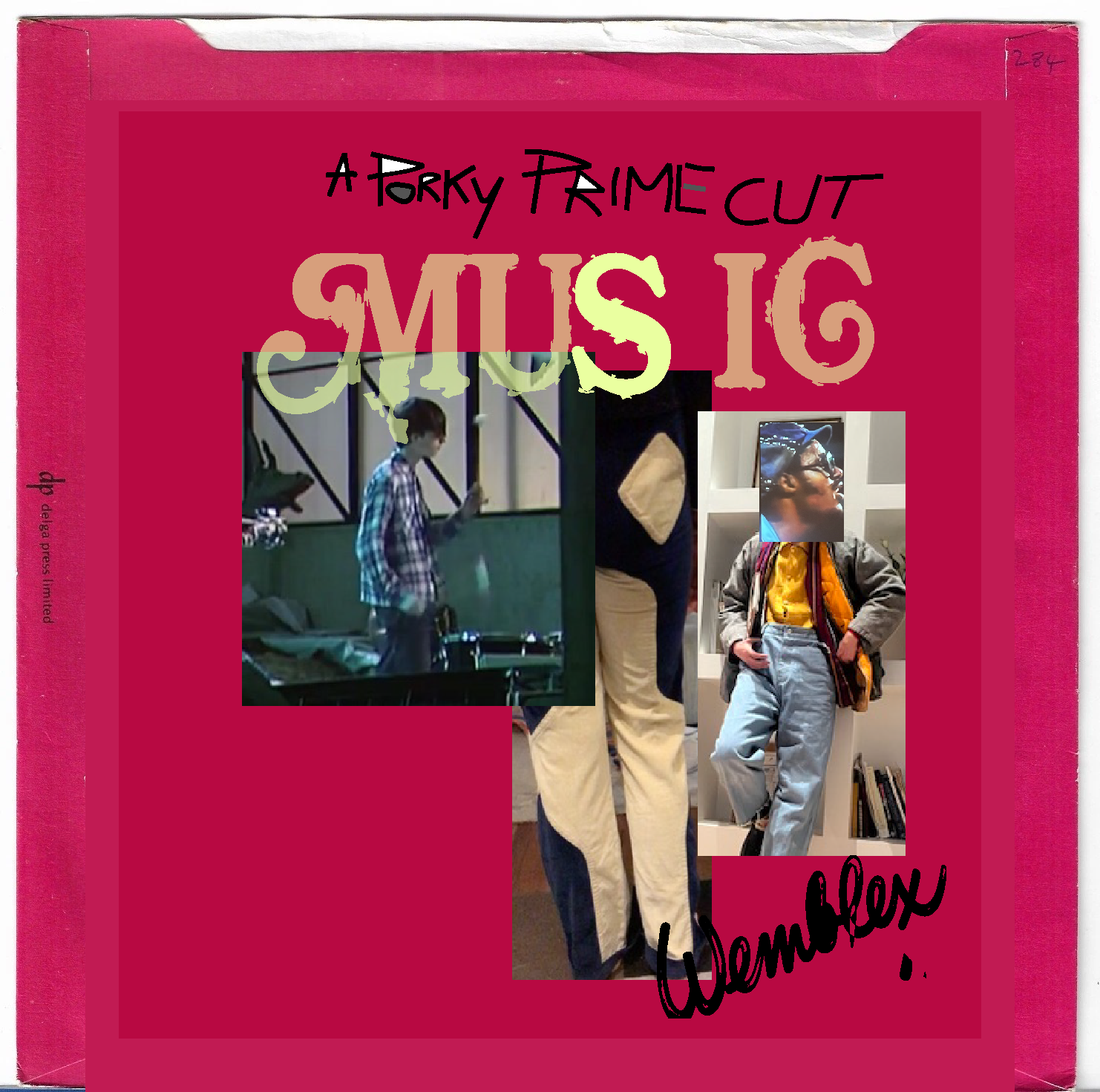
A razor blade through quarter-inch tape is a commitment. You hear the splice for the rest of the record's life. King Tubby's drop-outs, Perry's saturation, the Studio One room tone sitting behind everything like damp in a wall: all of it is the sound of a choice that could not be undone at four in the morning.
The mouse removed the cost and, with it, the reason to choose. Infinite revision produces a record that agrees with everybody. We are not against computers; we are against the fantasy that a decision without weight is still a decision.

Track A — English
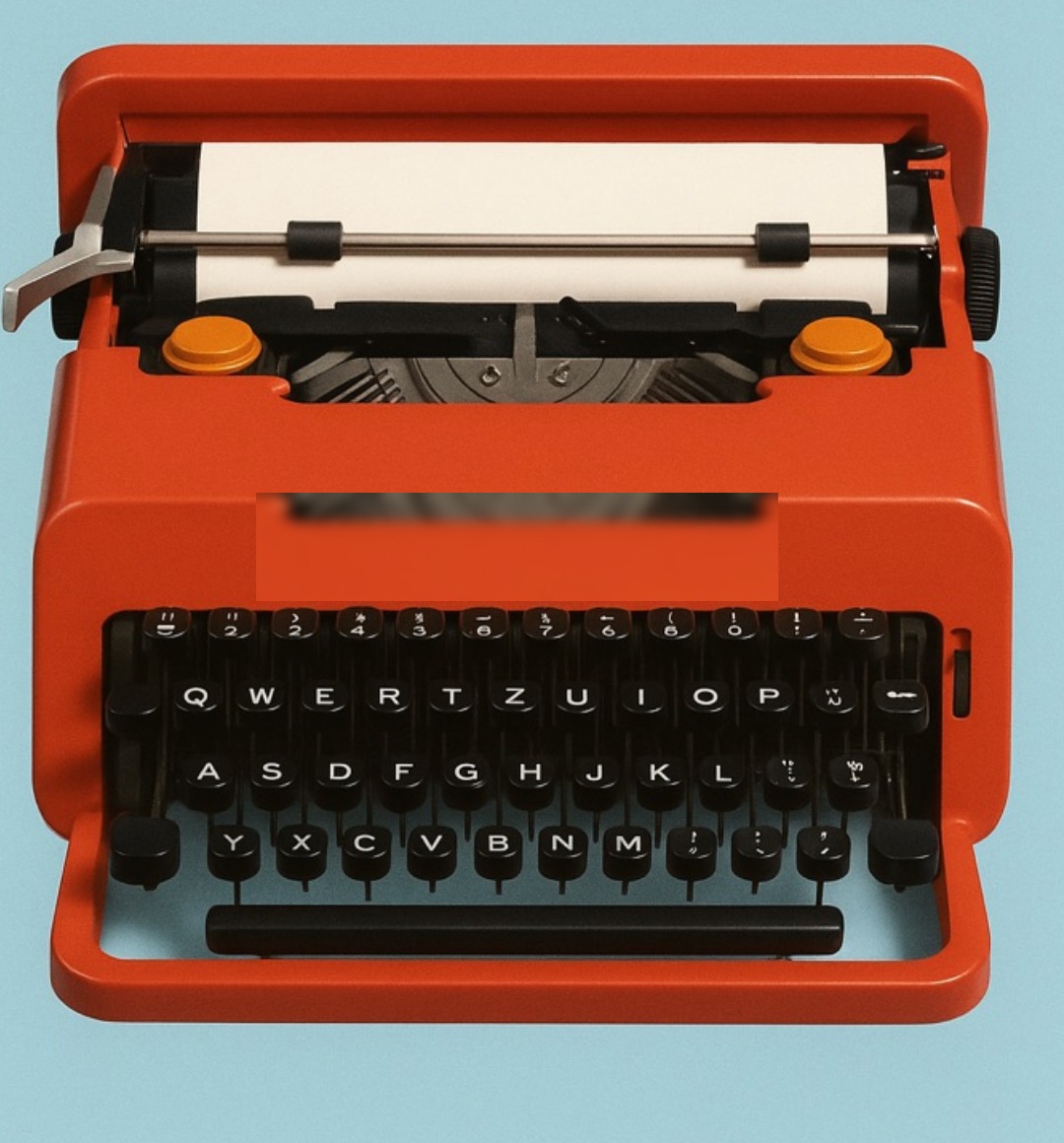
A loop is not laziness. It is a held note long enough for you to walk round it. Dub understood this first: strip the song until the room is the melody, then let the same eight bars ask the same question until the answer changes.
Print does the same trick with furniture. The rule at the top, the rule at the bottom, the page code on the right. Same eight bars, every sheet. The repetition is what lets the content be heard.
House rule
Keep the frame identical and let the evidence move. Novelty in the frame is a way of hiding a thin idea.
Track B — Symbol
Primer
Track B is not decoration and not a code to be cracked. Seven marks, read left to right, subject then operation then result.
The set
Ground — The blank sheet. Where an argument is allowed to start.
Press — Ink laid down. A statement that cannot be taken back.
Order — Ruled lines. Structure imposed, for good or ill.
Machine — Any system that runs whether or not you consent.
Chain — Dependency. What the machine uses to keep you near it.
Loop — Repetition held long enough to be examined.
Refusal — The mark you supply. Nothing else in the set is yours.
A worked example
Blank sheet, ink laid down, refusal. In English: we printed it, and printing it was the argument.
Printed edition · nine pages
Spread 01 — four positions, two tracks apiece. English on Track A, symbols on Track B, evidence printed underneath. Direct printer output: white paper, black ink, no decoration.
Spread 01: The Analog Engine & The Glyphic Continuum
Track A — English
Recording gear was never a passive tool; it was the lead instrument. From King Tubby and Lee Scratch Perry mixing live mixing desks like blunt instruments, to the analog warmth of Studio One and the unyielding rhythm of Charles Stepney, the studio functioned as a physical engine. When digital editing arrived, it traded real-world friction and soul for convenience. We reject the mouse click. We demand the tactile weight of the tape loop.
Track B — Symbol
Track A — English
True thought transcends standard language; it is pure geometry. Human communication has always operated on a continuous loop from ancient mud-pressed cuneiform and carved hieroglyphics, through Henry Dreyfuss’s industrial design symbols, all the way to the Acid House Smiley and modern digital pixels. We carve our symbols into a new wall.
Track B — Symbol
Track B is not decoration. It is a second reading of the same statement, written in the continuous alphabet of pressure, loop and warmth. Each row below sets the sequence, then gives its plain translation.
Pressure enters a closed circuit and leaves as warmth. The medium adds something the source did not have.
One alphabet, five thousand years long. The pictograph never left; it changed substrate.
Convenience is overridden by friction. We choose the harder instrument.
Track A — English
Parody is a weapon of cultural guerrilla warfare. Taking the sacred geometry of mainstream pop history—like subverting the Elvis debut layout for London Calling—or hijacking corporate luxury logos and stitching them onto raw, distressed track tops is the essence of détournement. We strip corporate media of its meaning and turn it against itself.
Track B — Symbol
Track A — English
We anchor this subversion in the physical architecture of a Wemblex boxy shirt—complete with its vintage rounded collars and contrasting cuffs—and the Joseph Beuys felt suit translated into heavyweight winter sweatshirt fabric. Art hanging in a museum is dead; we engineer it as armor for the street. Ink on paper, thread on cloth.
Track B — Symbol
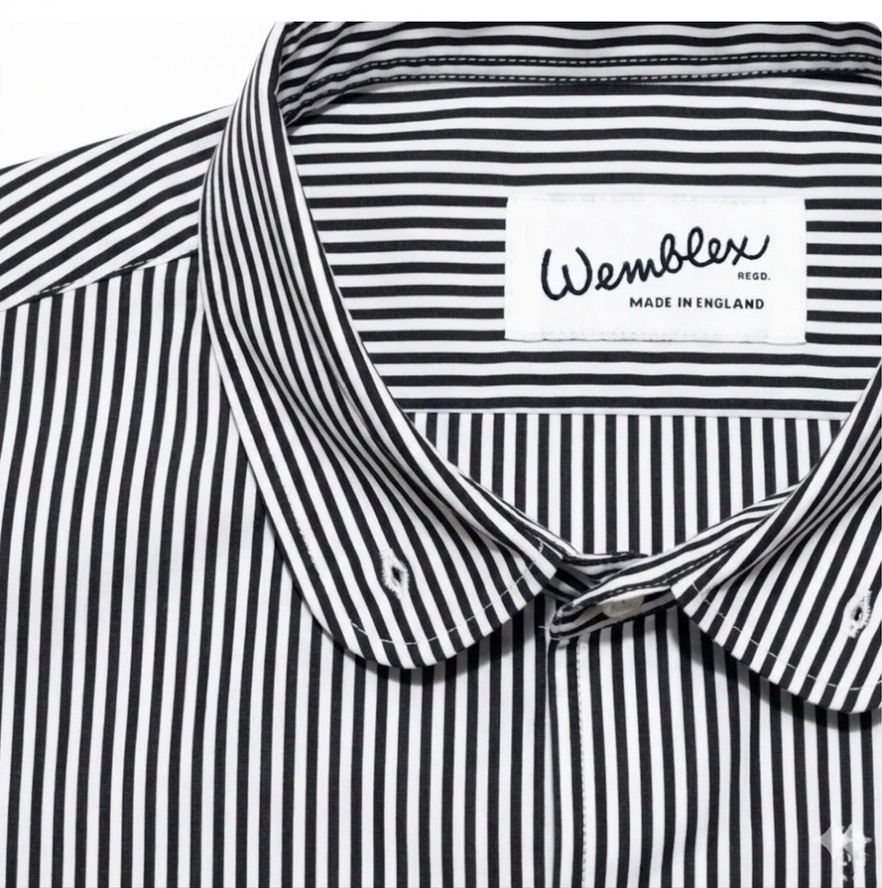

Détournement written as grammar: an existing sign, an operation performed on it, and the artifact that walks away from the scene wearing the result.
The form is already paid for. Keep the layout, replace the promise, hand it back.
The Beuys suit is translated into sweatshirt weight. Museum to street, intact.
Art behind glass is dead. Worn out of the house, it is evidence.
Track A — English
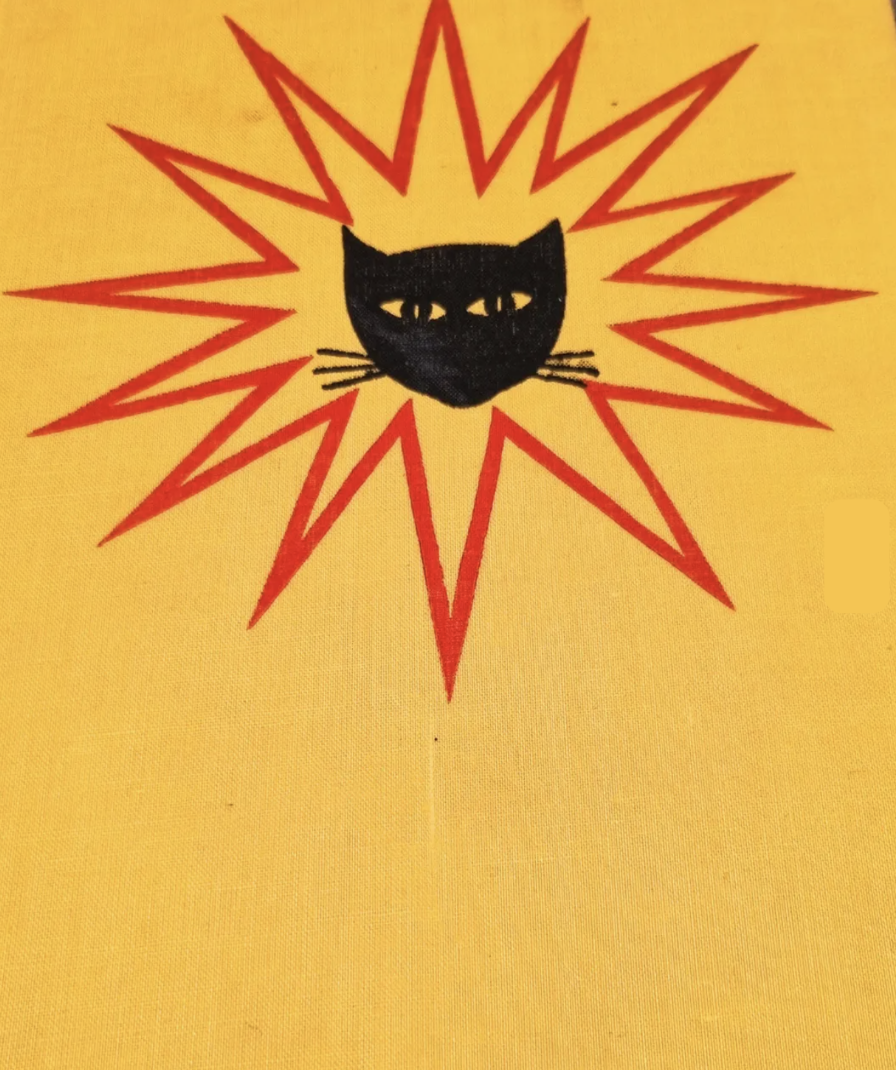
A scene is a room before it is a movement. Blues parties, basement soundsystems, back-room record shops and the one pub that lets you put up a poster: these are the plants that culture actually grows in. No committee, no funding round, no brand activation. The clubhouse admits you on the strength of what you carry through the door, and it throws you out for posturing.
Track B — Symbol
Track A — English
Identity is not declared, it is woven. A stripe, a stencil, a run of twelve shirts and a hand-drawn mark do more work than a mission statement ever will. What you wear is a document of what you have decided; the cloth carries the argument out of the building and into the street where it can be contradicted.
Track B — Symbol

The clubhouse has a grammar too. A room admits a signal; the signal is repeated until it becomes a mark; the mark is worn until it becomes a membership.
You are in because of what you carried through the door. Nothing else counts.
Identity is woven, not declared. Twelve shirts beat a mission statement.
The scene refuses sponsorship and keeps the room.
Track A — English
Hardware resists you, and that resistance is the content. A stencil clogs, a press mis-registers, a tape saturates, a photocopier drops the mid-tones. Every one of those failures is a decision the machine makes with you. Software offers infinite undo and produces infinite sameness; we keep the errors and print them at full size.
Track B — Symbol
Track A — English
Fabric is the last honest surface. It creases where you move, fades where the sun hits, and reports on the life of whoever is inside it. A jacket carries the whole argument for a decade; a feed carries it for an afternoon. We are printing for the decade.
Track B — Symbol

The final grammar page. Learn the machine well enough to make it fail on purpose, then keep the failure as the finished mark. Craft first, then the break.
The error is not a fault in the print. The error is the print.
Cloth records a decade of decisions. A feed records an afternoon.
Break it only once you can build it. Then start the next run.
Track A — English
Distribution is the work. Where a thing lands changes what it means: a hand, a counter, a shop window, a wall at head height. Choose the hands. KULTUR is the shop route out of this manifesto—ink on paper, screen like lacquer, the bullshit detector running on both.
Track B — Symbol
Track A — English
Issue 01 is a threat, not a summary. Everything printed here is provisional and will be contradicted by the next run, which is the only proof that anyone is still working. Open the shop, take the paper, make the next one worse in the right direction.
Track B — Symbol
Back page
How this issue was made, and the rules it was made under.
Setting
Body and labels in typewriter face. White paper ground, black ink, no colour anywhere in the issue. Hard rules top and bottom of every sheet, section left, page code right.
Pages are laid out at A4 portrait with a 10mm paper margin, so the printed PDF matches the screen sheet exactly.
Contents of Issue 01
Cover; Free Will / Control (plate and essay); The Tape Loop Is the Argument; How to Read Track B; The Omnibus Manifesto in nine pages; this colophon.
Terms
Printed loud, read quiet. Reproduce it, photocopy it, staple it to a wall. Do not tint it.